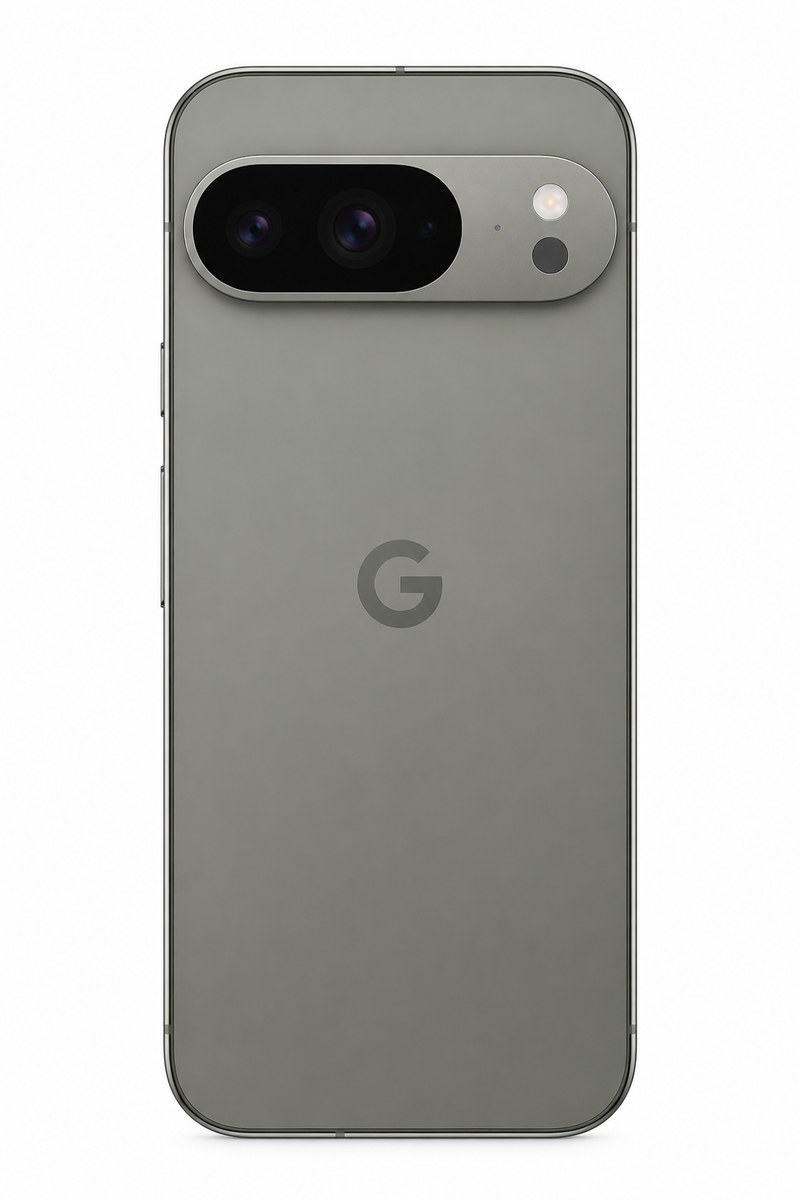
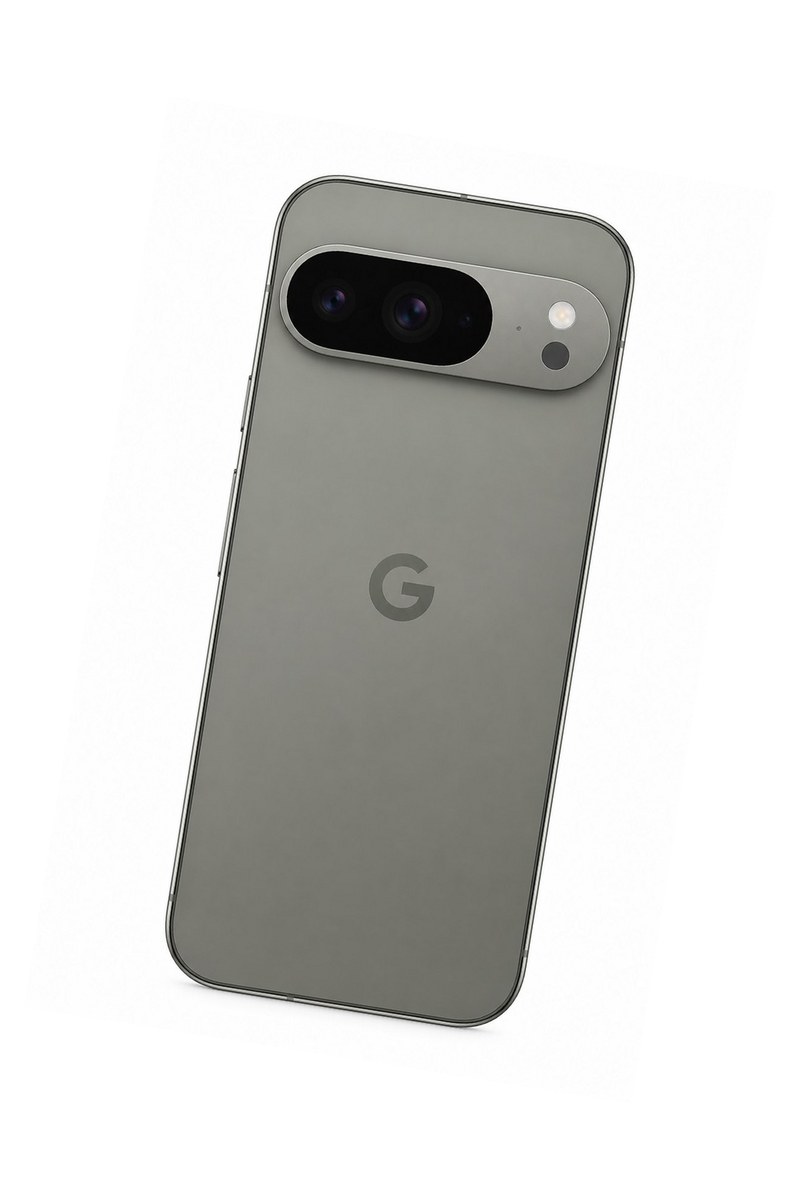
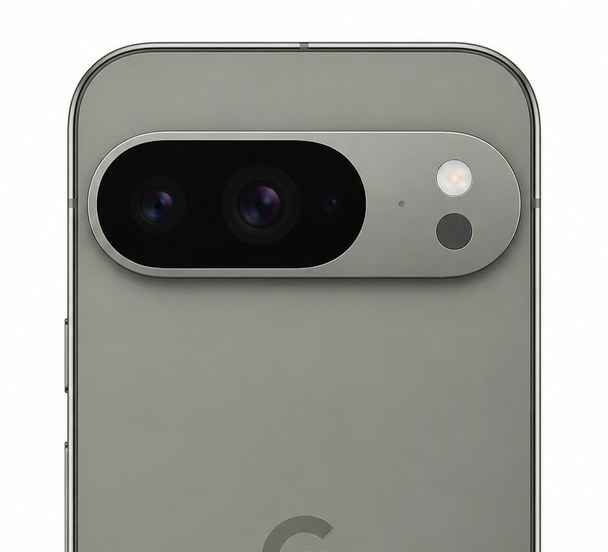
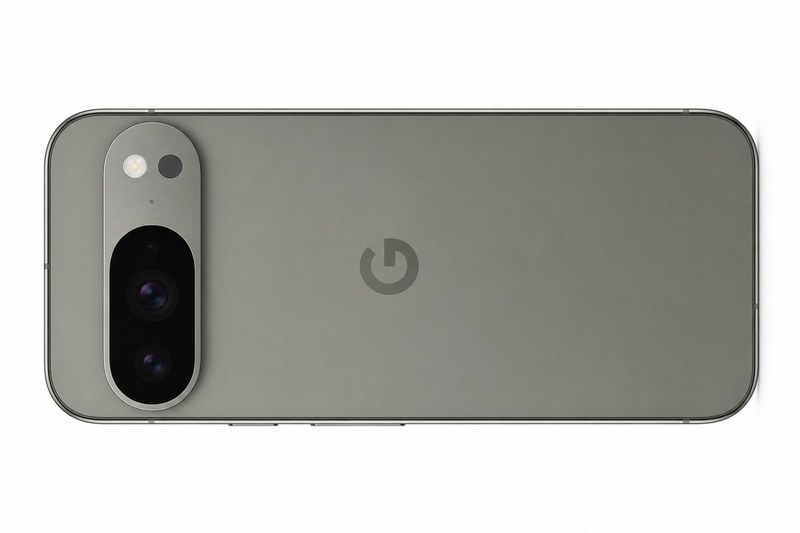
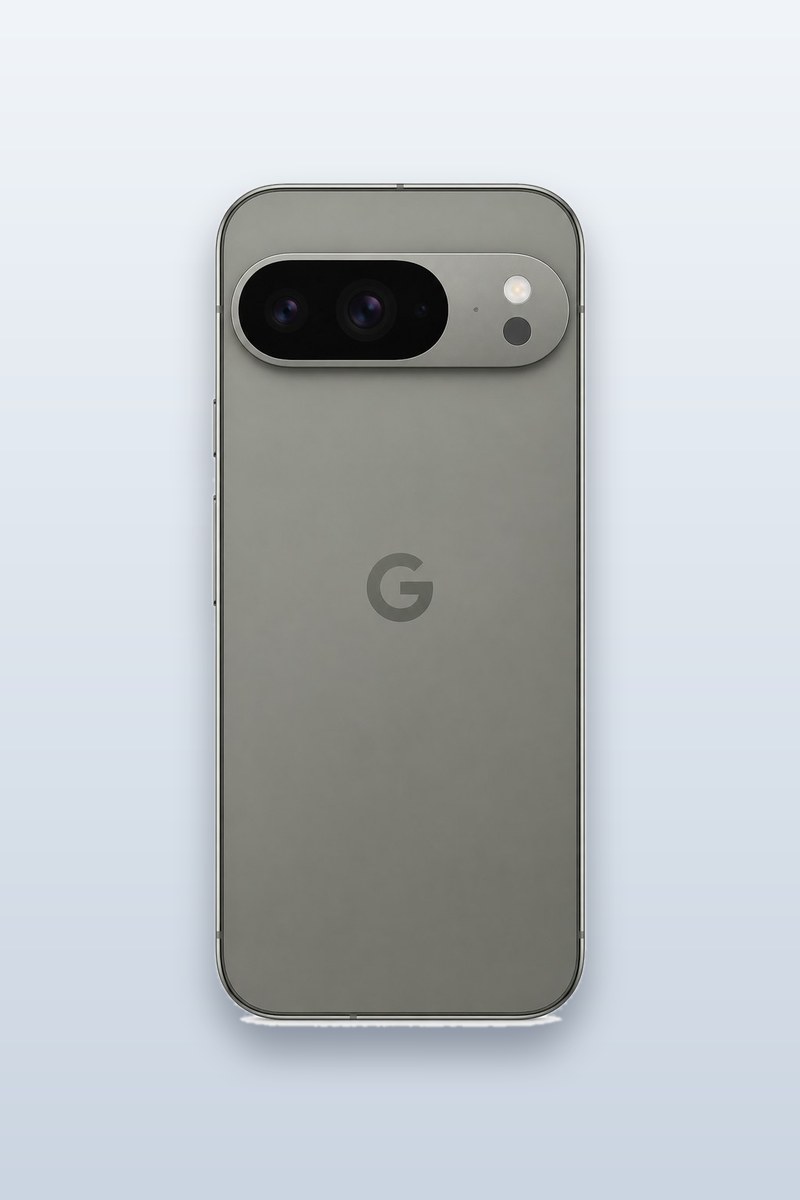
Illustrative images for identification. Not official manufacturer store photos. AllMobileSpecs is not affiliated with Google.
Pixel 9 Pro
$999.00
Indicative USD (or converted display amount). Not a sale price and not an offer to buy.
Google flagship with Tensor G4 and advanced camera AI.
Overview
The Pixel 9 Pro is Google’s smaller 2024 Pro Pixel: a 6.3-inch LTPO OLED, the Tensor G4 chipset, 16 GB of RAM in the units we list, and a triple camera with a 50 MP main sensor. Google sells the Pro as a photography and AI-features phone. We still document the radios, charging, and IP68 rating, because those decide whether the phone survives rain and how fast it refills.
The most interesting thing about this model is its size. At 6.3 inches and 199 g it is the compact flagship of the current field — the Pro XL exists separately for people who want the large one — and it carries the full Pro camera system rather than a cut-down version. Compact phones with flagship cameras have become genuinely rare, and for a certain buyer that alone settles the decision.
Tensor G4 is Google’s own chipset, and it is the part of this phone most often misunderstood. It does not win benchmarks. Against the Snapdragon 8 Elite in the Galaxy, the OnePlus, and the Xiaomi on this site, it benchmarks lower and runs hotter under sustained load. It is designed around on-device machine learning — the speech, translation, and computational photography features Google actually markets — rather than around peak frame rates. If you buy a Pixel for sustained gaming performance you are buying against the design intent, and you will feel it.
The camera is where the Tensor argument pays off. Google's approach is computational: it captures multiple frames and merges them, and the processing does more work than the sensor size would suggest. The result is consistency — Pixel photos are hard to get badly wrong — with a fairly assertive processing style that not everyone likes. The 42 MP selfie camera is unusually high-resolution for the class.
27 W wired charging is slower than nearly every Chinese-brand flagship and slower than Samsung. That is a real trade-off, not a footnote: with a 4700 mAh battery it means a full charge is an hour-plus affair. Wireless charging is 15 W. Wi-Fi 7 and 5G are listed as announced.
Software is where the Pixel is strongest. Android updates arrive on the day Google releases them, with no manufacturer or carrier delay, and Google's published support commitment for recent Pixel generations has been the longest in the Android world. Confirm the current policy on Google's site for the exact model, because the commitment has changed between generations and we will not print a number Google has not committed to.
Availability is the weak point. Google sells Pixels officially in a limited set of countries; imported units may miss carrier bands or features. AllMobileSpecs does not sell Pixels and is not a Google partner. The image is illustrative and USD pricing is for orientation only.
Who it is for
The obvious pick if you want a flagship camera in a phone you can actually use one-handed, or if day-one Android updates and the longest support window in the Android world are what you are shopping for. It also suits people who want good photos without thinking about photography — the processing is designed so that the point-and-shoot result is the good result.
Skip it if you play demanding games for long sessions, because Tensor G4 is the weakest sustained performer among the flagships on this site. Skip it if charging speed matters, since 27 W is the slowest wired figure in our flagship catalog. And check availability before you fall in love with it: if Google does not sell officially in your country, you are buying an import with the band-support and warranty consequences that carries. If you want the same cameras on a bigger screen, the Pro XL is the model to look at instead.
How it compares
Against the Galaxy S25 Ultra, the Pixel is smaller, cheaper, and slower in raw performance, and it has one fewer telephoto camera. It answers with day-one updates, a genuinely one-handed body, and camera output that needs less work from the photographer. The Ultra is the better hardware; the Pixel is often the better photograph.
Against the iPhone 16 Pro Max, the comparison is size before anything else — the Pixel is the compact option and costs meaningfully less. Both have strong long-term software support.
Against the OnePlus 13, it is not close on hardware: the OnePlus has a bigger battery, far faster charging, and a stronger chipset for the money. Choose the Pixel for the camera and the software, not for the specification sheet.
Specifications
Hardware as typically announced. Blank fields mean we have not entered a figure — we do not invent specs.
| Technology | GSM / HSPA / LTE / 5G |
|---|
| Announced | 2024, August |
|---|---|
| Status | Available |
| Dimensions | 152.8 x 72.0 x 8.5 mm |
|---|---|
| Weight | 199 g |
| SIM | Nano-SIM + eSIM |
| IP rating | IP68 |
| Colors | Obsidian, Porcelain, Hazel, Rose Quartz |
| Type | LTPO OLED, 120Hz |
|---|---|
| Size | 6.3 inches |
| Resolution | 1280 x 2856 pixels |
| Protection | Gorilla Glass Victus 2 |
| OS | Android 14 |
|---|---|
| Chipset | Google Tensor G4 |
| CPU | Octa-core |
| GPU | Mali-G715 MC7 |
| RAM | 16 GB |
|---|---|
| Storage | 128 GB / 256 GB / 512 GB / 1 TB |
| Card slot | No |
| Main | 50 MP (wide) + 48 MP (telephoto) + 48 MP (ultrawide) |
|---|---|
| Selfie | 42 MP |
| Loudspeaker | Yes, stereo speakers |
|---|---|
| 3.5mm jack | No |
| WLAN | Wi-Fi 7 |
|---|---|
| Bluetooth | 5.3 |
| NFC | Yes |
| USB | USB Type-C 3.2 |
| Capacity | 4700 mAh |
|---|---|
| Charging | 27W wired, 15W wireless |
| Sensors | Fingerprint (under display), accelerometer, gyro, proximity, compass, barometer |
|---|