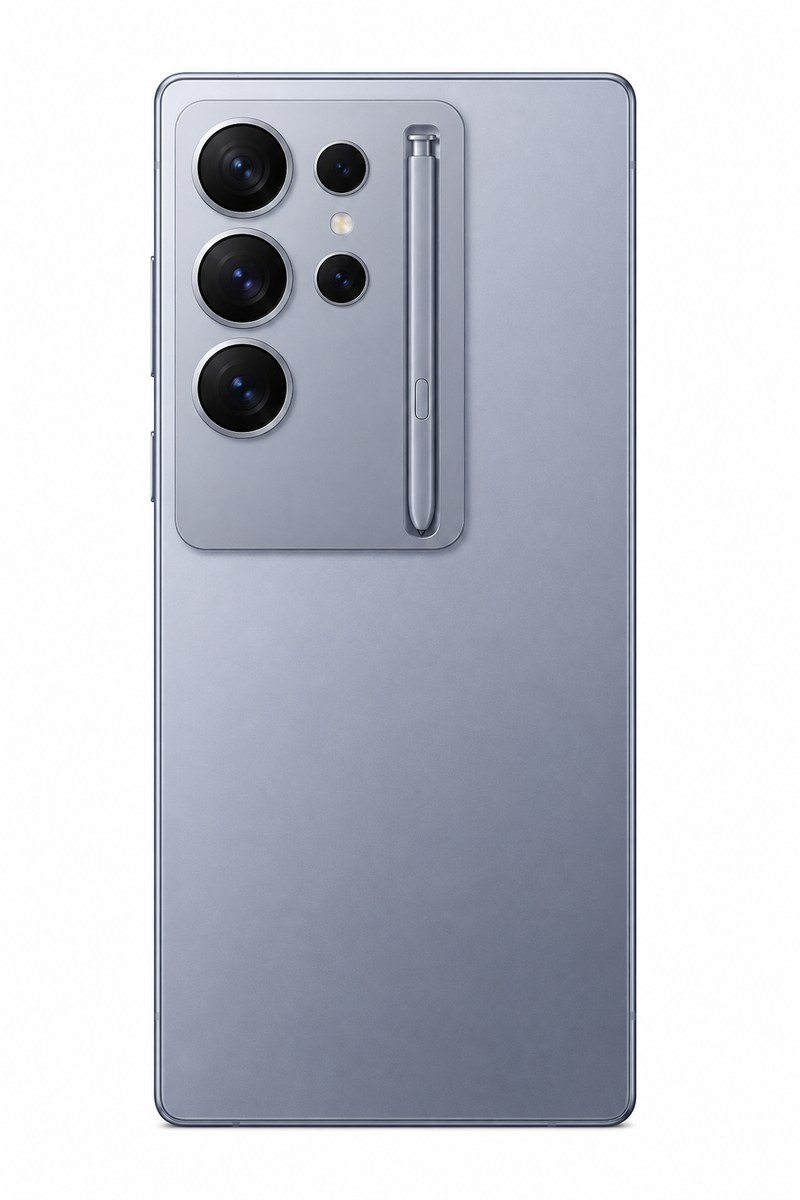
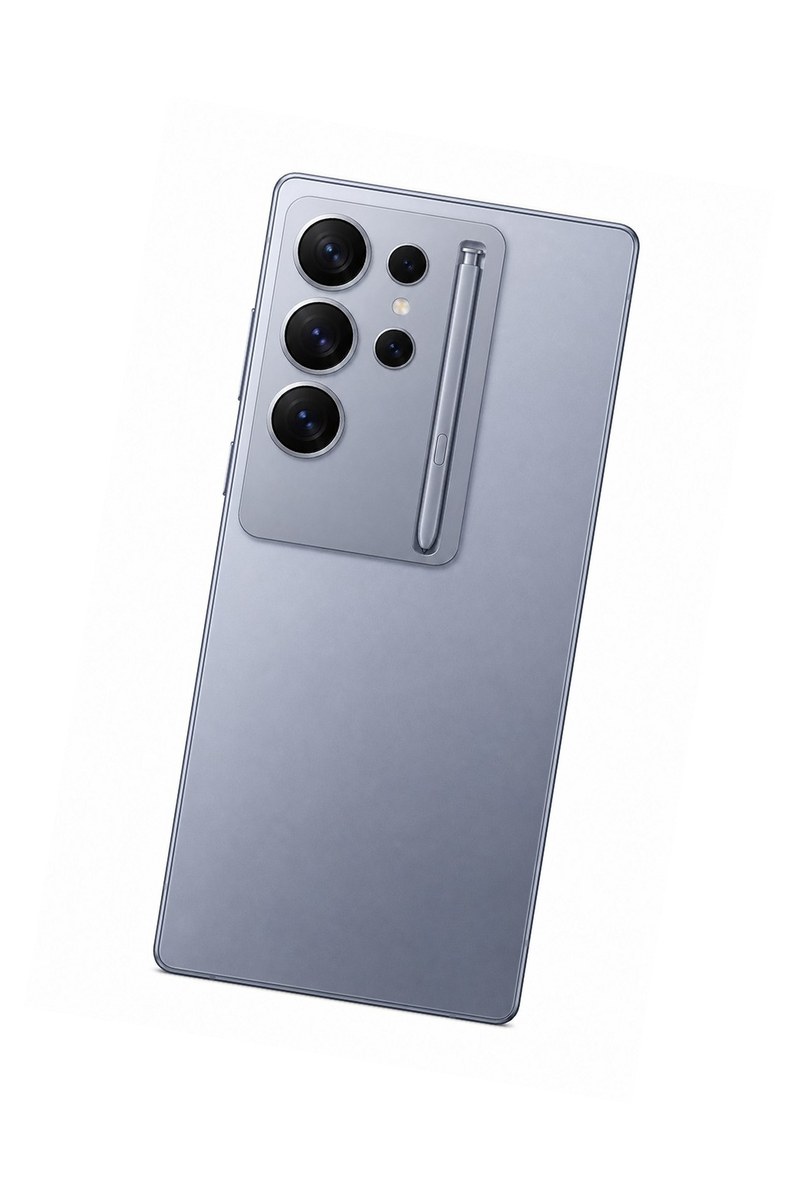
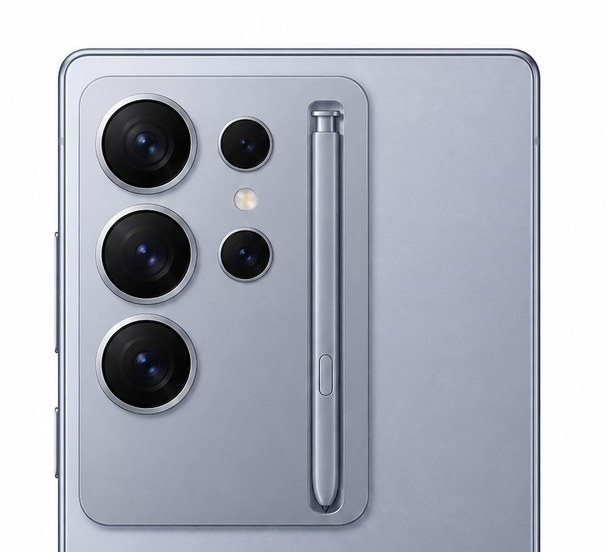
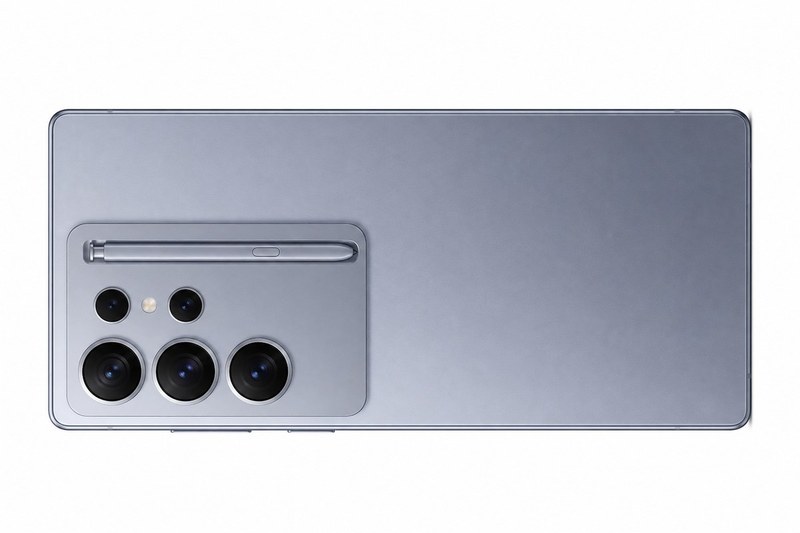
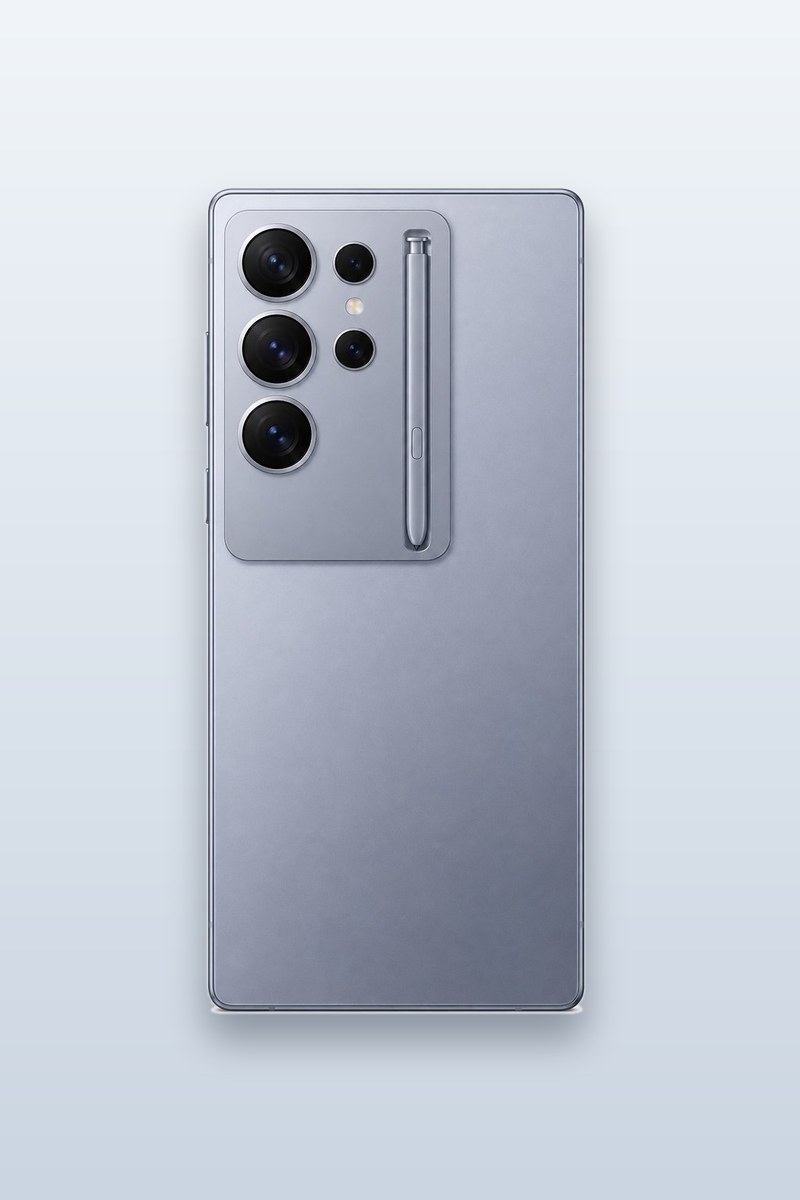
Illustrative images for identification. Not official manufacturer store photos. AllMobileSpecs is not affiliated with Samsung.
Galaxy S25 Ultra
$1,299.00
Indicative USD (or converted display amount). Not a sale price and not an offer to buy.
Samsung flagship with a 200 MP camera and S Pen.
Overview
The Galaxy S25 Ultra sits at the top of Samsung’s 2025 S-series: a large high-resolution AMOLED, a Snapdragon 8 Elite chipset in the units we list, and a four-camera rear array led by a 200 MP main sensor. It is a productivity-oriented flagship — the S Pen is part of the Ultra identity — rather than a compact phone.
On paper the display is 6.9 inches at QHD+ with a 120 Hz panel and Gorilla Glass Armor 2. That combination is aimed at people who read, map, and edit on the phone itself. It is also the single largest power draw in the device. The panel is LTPO, which means it can drop its refresh rate down when the screen content is static, and most owners will find that Samsung ships it at FHD+ by default rather than the full QHD+ the sheet advertises. Switching to QHD+ is a settings toggle and it does cost battery — the resolution on the table is the maximum the hardware supports, not the resolution you are running out of the box.
The 200 MP main camera is the number people quote, and it is the one most likely to be misread. The sensor does not produce 200-megapixel photographs in normal use. It combines groups of adjacent pixels into one larger output pixel — pixel binning — and delivers roughly 12 MP files with better light-gathering than a native 12 MP sensor would manage. The practical benefit is low-light performance and the ability to crop hard without falling apart, not enormous files. The more interesting hardware is arguably the pair of telephoto cameras: a 50 MP periscope and a 10 MP shorter telephoto, which give the phone two genuine optical zoom steps instead of one.
The 5000 mAh battery with 45 W wired charging is typical of recent Ultras, and it is where the phone loses on paper. 45 W is roughly half what OnePlus and Xiaomi flagships list, and it has not moved in several generations. In practice a 45 W charge from empty is a matter of an hour rather than half an hour. Capacity is generous enough that most people charge overnight and never notice; if you are the sort of person who tops up for ten minutes before going out, you will notice.
We list RAM and storage as 12/16 GB and 256 GB through 1 TB because those are the announced configurations, not because every shop stocks every SKU. There is no memory card slot, so the storage tier you buy is the storage you keep. Titanium colours and IP68 are build details; they do not replace a hands-on check for weight — about 218 g — if you dislike large phones. That figure puts it among the heaviest conventional phones on this site.
AllMobileSpecs does not sell this phone. The USD price is a launch-era flagship reference so you can compare it with other Ultras and Pro models; street prices fall considerably within a few months of release, and carrier trade-in offers distort them further. Images on this page are illustrative, not official Samsung product photography.
Who it is for
Consider this sheet if you want the largest mainstream screen with a stylus built into the body, if you shoot at long zoom often enough that two telephoto cameras is a real feature rather than a spec-sheet line, or if you want a long software-support window on Android and are already comfortable in One UI. It is also a reasonable choice if you keep phones for four or five years, because the support commitment and the storage ceiling both age well.
Look elsewhere if you want a light phone — 218 g and a 6.9-inch footprint are not negotiable, and no case makes them smaller. Look elsewhere if fast charging matters to you, because 45 W is beaten by roughly half the Android flagships on this site. And look elsewhere if you want a headphone jack or expandable storage, neither of which has appeared on an Ultra in years and neither of which is coming back.
How it compares
Against the iPhone 16 Pro Max, the two are the same size and roughly the same price, and the decision is almost entirely about which operating system you already live in. The Ultra offers more zoom hardware, more RAM, a stylus, and a higher-resolution panel; the iPhone offers a tighter hardware-software integration and better resale value.
Against the OnePlus 13, the Ultra costs substantially more and gives you the second telephoto camera, the S Pen, and the longer update commitment. The OnePlus answers with a 6000 mAh battery against 5000, and 100 W charging against 45. If your complaint about phones is that they run out and take too long to refill, that is not a close comparison.
Against the Xiaomi 15 Ultra, the camera hardware is comparable and the charging gap is again wide. Availability and software support are the practical separators in most countries.
Specifications
Hardware as typically announced. Blank fields mean we have not entered a figure — we do not invent specs.
| Technology | GSM / HSPA / LTE / 5G |
|---|
| Announced | 2025, January |
|---|---|
| Status | Available |
| Dimensions | 162.8 x 77.6 x 8.2 mm |
|---|---|
| Weight | 218 g |
| SIM | Nano-SIM + eSIM / Dual eSIM |
| IP rating | IP68 |
| Colors | Titanium Black, Gray, Silver Blue, White Silver |
| Type | Dynamic AMOLED 2X, 120Hz, HDR10+ |
|---|---|
| Size | 6.9 inches |
| Resolution | 1440 x 3120 pixels |
| Protection | Gorilla Glass Armor 2 |
| OS | Android 15, One UI 7 |
|---|---|
| Chipset | Qualcomm Snapdragon 8 Elite |
| CPU | Octa-core (2x4.47 GHz Oryon + 6x3.53 GHz Oryon) |
| GPU | Adreno 830 |
| RAM | 12 GB / 16 GB |
|---|---|
| Storage | 256 GB / 512 GB / 1 TB |
| Card slot | No |
| Main | 200 MP (wide) + 50 MP (periscope telephoto) + 10 MP (telephoto) + 50 MP (ultrawide) |
|---|---|
| Selfie | 12 MP |
| Loudspeaker | Yes, stereo speakers |
|---|---|
| 3.5mm jack | No |
| WLAN | Wi-Fi 7 |
|---|---|
| Bluetooth | 5.4 |
| NFC | Yes |
| USB | USB Type-C 3.2 |
| Capacity | 5000 mAh |
|---|---|
| Charging | 45W wired, 15W wireless |
| Sensors | Fingerprint (under display), accelerometer, gyro, compass, barometer |
|---|